The lowest-calorie foods are watery vegetables: iceberg lettuce and celery have 14 kcal per 100 g, cucumber 15, radish 16, zucchini 17 and tomato 18. Fresh fruit comes next. Watermelon has 30 kcal per 100 g, strawberries 32 and an apple 52. Among protein foods the lightest are egg whites (52 kcal), nonfat Greek yogurt (59), 2% cottage cheese (81), cod (82) and shrimp (99).
What these foods share is a lot of water and very little fat. That is why a big plate of them costs few calories. For weight loss the useful ones are those that also keep you full: lean protein, boiled potatoes, legumes and whole fruit do that better than lettuce alone.
Low-calorie foods list: table per 100 g and per portion
There are 32 foods in the table, from the lightest down. The numbers are rounded values from USDA FoodData Central. The last column shows how much of each food you get for 100 kcal, and it is the quickest way to compare them.
| Food | Group | kcal per 100 g | Typical portion | 100 kcal is |
|---|---|---|---|---|
| Lettuce, iceberg | Vegetable | 14 | 100 g: 14 kcal | 714 g |
| Celery | Vegetable | 14 | 100 g: 14 kcal | 714 g |
| Cucumber with peel | Vegetable | 15 | 150 g: 22 kcal | 667 g |
| Radish | Vegetable | 16 | 100 g: 16 kcal | 625 g |
| Zucchini | Vegetable | 17 | 200 g: 34 kcal | 588 g |
| Tomato | Vegetable | 18 | 150 g: 27 kcal | 556 g |
| White mushrooms | Vegetable | 22 | 150 g: 33 kcal | 455 g |
| Spinach | Vegetable | 23 | 100 g: 23 kcal | 435 g |
| Cabbage | Vegetable | 25 | 150 g: 38 kcal | 400 g |
| Cauliflower | Vegetable | 25 | 200 g: 50 kcal | 400 g |
| Eggplant | Vegetable | 25 | 200 g: 50 kcal | 400 g |
| Pumpkin | Vegetable | 26 | 200 g: 52 kcal | 385 g |
| Red bell pepper | Vegetable | 26 | 150 g: 39 kcal | 385 g |
| Watermelon | Fruit | 30 | 300 g: 90 kcal | 333 g |
| Green beans | Vegetable | 31 | 150 g: 46 kcal | 323 g |
| Strawberries | Fruit | 32 | 200 g: 64 kcal | 312 g |
| Broccoli | Vegetable | 34 | 200 g: 68 kcal | 294 g |
| Carrot | Vegetable | 41 | 100 g: 41 kcal | 244 g |
| Orange | Fruit | 47 | 150 g: 70 kcal | 213 g |
| Apple with skin | Fruit | 52 | 180 g: 94 kcal | 192 g |
| Egg white, raw | Protein | 52 | 100 g: 52 kcal | 192 g |
| Greek yogurt, plain, nonfat | Protein | 59 | 170 g: 100 kcal | 169 g |
| Cottage cheese, 2% | Protein | 81 | 200 g: 162 kcal | 123 g |
| Cod, raw | Protein | 82 | 150 g: 123 kcal | 122 g |
| Potato, boiled, peeled | Side dish | 86 | 200 g: 172 kcal | 116 g |
| Buckwheat, cooked | Side dish | 92 | 200 g: 184 kcal | 109 g |
| Shrimp, cooked | Protein | 99 | 100 g: 99 kcal | 101 g |
| Turkey breast, raw | Protein | 114 | 150 g: 171 kcal | 88 g |
| Lentils, boiled | Side dish | 116 | 200 g: 232 kcal | 86 g |
| Tuna, canned in water, drained | Protein | 116 | 100 g: 116 kcal | 86 g |
| Chicken breast, skinless, raw | Protein | 120 | 150 g: 180 kcal | 83 g |
| White rice, cooked | Side dish | 130 | 200 g: 260 kcal | 77 g |
Check whether a line says raw or cooked. Chicken and fish lose water in the pan, so 100 g of roasted chicken breast has 165 kcal, not 120. Rice and buckwheat go the other way, because they take up water as they boil.
Low-calorie foods that are filling
A food can be low in calories and still leave you hungry an hour later. Researchers describe this with energy density, the calories in one gram of food. Water has none and fat has 9 kcal per gram, so watery foods have a low density and fatty ones a high density. In her review of these studies, Barbara Rolls reports that people ate fewer calories without being told to when the energy density of their meals was lowered. A soup, salad or fruit eaten as a first course also cut the calories of the whole meal.
An older experiment tested fullness food by food. Volunteers ate 240 kcal servings of 38 different foods and rated their hunger over the next two hours. White bread was the reference point at 100%. Boiled potatoes scored 323%, the highest of all, and a croissant scored 47%. Foods with more water, fiber and protein scored higher. Fatty ones scored lower.
So the filling low-calorie foods are these:
- Boiled potatoes: 86 kcal per 100 g, as long as you skip the butter and the frying.
- Lean protein: cod, shrimp, chicken or turkey breast, egg whites, cottage cheese, Greek yogurt.
- Lentils and beans: 200 g of boiled lentils is 232 kcal and brings both protein and fiber.
- Whole fruit: an apple or an orange rather than juice.
- Vegetables in bulk: cabbage, broccoli, cauliflower, zucchini, tomatoes, as a salad, a soup or a side.
What 200 kcal looks like
The same 200 kcal can be more than a kilogram of food or less than two tablespoons. That is how two plates that look the same size end up far apart in calories.
| Food | kcal per 100 g | 200 kcal is |
|---|---|---|
| Cucumber | 15 | 1,333 g |
| Strawberries | 32 | 625 g |
| Potato, boiled | 86 | 233 g |
| Chicken breast, raw | 120 | 167 g |
| White rice, cooked | 130 | 154 g |
| White bread | 266 | 75 g |
| Cheddar cheese | 403 | 50 g |
| Almonds | 579 | 35 g |
| Dark chocolate, 70–85% cocoa | 598 | 33 g |
| Olive oil | 884 | 23 g |
The foods at the bottom are not bad ones. Eat nuts, cheese and olive oil, but put them on a scale or in a measuring spoon first, because a little extra adds a lot. Dried fruit works the same way. Mayo Clinic gives this example: a cup of grapes has about 104 calories and a cup of raisins about 480.
Low-calorie foods high in protein
Protein is what people most often run short on when they eat light. Egg whites are the extreme case, with 10.9 g of protein and only 52 kcal in 100 g. A 170 g pot of nonfat Greek yogurt comes to 100 kcal and 17 g of protein. A raw cod fillet of 150 g has 27 g for 123 kcal. Cooked shrimp is close to that: 24 g of protein and 99 kcal in 100 g. Chicken breast costs a little more and is still lean, since a raw piece of 150 g gives about 34 g of protein for 180 kcal. There is a longer ranking in the list of high-protein foods.
Low-calorie snacks and dinner ideas
Everything below comes from the table. Weigh the foods the way they are listed there and cook them without oil.
- Yogurt with berries: a 170 g pot of nonfat Greek yogurt with 150 g of strawberries is 148 kcal.
- Cottage cheese with vegetables: 150 g of 2% cottage cheese, a cucumber of the same weight and a 100 g tomato. Together 162 kcal.
- Something to crunch: a carrot and a few celery sticks, 100 g each, 55 kcal.
- Fish dinner: a 150 g cod fillet, 200 g of cauliflower and half as much broccoli, 207 kcal.
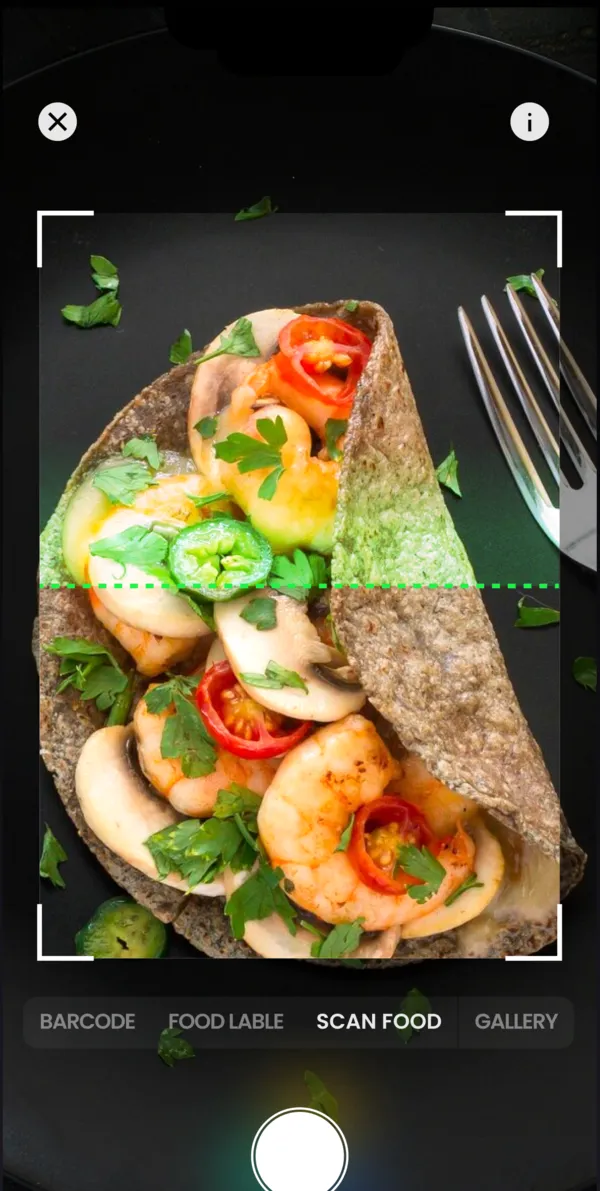
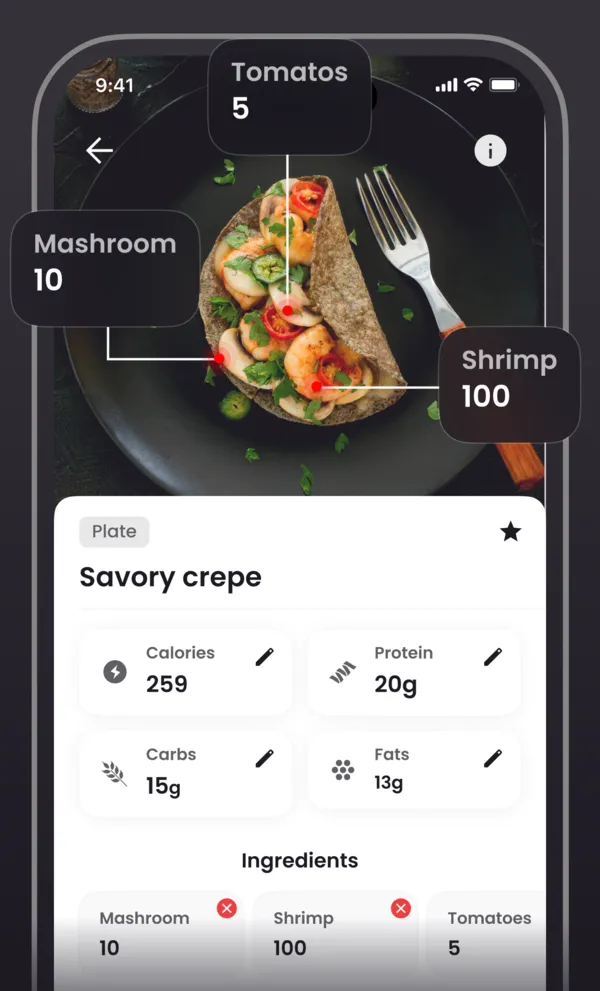
- Shrimp with vegetables: 100 g of cooked shrimp, 200 g of zucchini and a red bell pepper (150 g). That makes 172 kcal.
- Lentil bowl: 200 g of boiled lentils on 100 g of spinach with one large tomato (150 g), 282 kcal.
Example plate: about 400 kcal and 600 g of food
Here is a full lunch built from the table. It has a protein food, a filling side, two vegetables and a measured teaspoon of oil.
| Food | Weight | kcal |
|---|---|---|
| Chicken breast, skinless, raw weight | 150 g | 180 |
| Potato, boiled, peeled | 150 g | 129 |
| Cucumber | 150 g | 22 |
| Tomato | 150 g | 27 |
| Olive oil | 5 g | 44 |
| Whole plate | 605 g | 402 |
The plate has about 39 g of protein. Notice the oil: 5 g is the smallest thing on the plate, and it has almost as many calories as the cucumber and tomato together. Pour it without measuring and the lunch can pass 500 kcal.
How to use low-calorie foods to lose weight
- Find your number first. Low-calorie foods help only inside a calorie deficit. See how many calories you need a day and take 300–500 kcal off that.
- Fill half the plate with vegetables. 300 g of the vegetables in the table is 40–125 kcal.
- Add a lean protein food to every meal, so the plate keeps you full until the next one.
- Keep a filling side. Boiled potatoes, buckwheat, lentils or rice, 150–200 g cooked.
- Measure the dense things. Oil, nuts, cheese, sauces and dressings go on a scale or a spoon.
- Swap before you cut. Juice for whole fruit, sweet yogurt for plain, fried for boiled or baked.
If you want this as a ready menu, the 1,500 kcal meal plan and the 7-day weight loss meal plan are built the same way. Calories for more foods, including grains, meat and dairy, are in the food calorie chart.
Where the calories hide in "light" meals
A vegetable salad is low in calories until the dressing goes on. One tablespoon of olive oil, about 14 g, is roughly 120 kcal, which is more than 500 g of cucumbers and tomatoes. The same goes for mayonnaise, cheese on top, croutons and a handful of seeds. Count them as separate foods.
Drinks are the second place. Juice, sweet coffee and smoothies carry calories and do not fill you the way whole fruit does.
One more thing. Low-calorie does not mean the less the better. A day made only of cucumbers and lettuce leaves you short of protein, fat and energy, and it usually ends with overeating in the evening. Use these foods to make normal meals bigger, not to replace them. If you have a medical condition, are pregnant or are under 18, talk to a doctor before cutting calories.