To lose weight by counting calories, you eat a little less energy than your body uses, write down everything you eat and drink, and check the result on the scale once a week. In practice it is a simple routine: log your usual food for a week, set a daily target about 300–600 kcal below what you eat now, keep logging, weigh yourself under the same conditions and compare weekly averages. If the average has not moved after three weeks of honest logging, adjust. The NHS suggests aiming to lose 0.5 to 1 kg a week.
Counting does not burn fat by itself. It makes the gap between what you eat and what you need visible, so you can keep it. A systematic review of weight-loss studies consistently found that people who self-monitored their diet, activity and weight lost more, although the authors rated the evidence as weak because most studies relied on self-report.
How to lose weight by counting calories: the plan week by week
The first month is about learning what you eat and finding a target that works for your body. After that, it is mostly repetition.
| When | What to do | What to look at |
|---|---|---|
| Week 1 | Log everything you eat and drink as usual, without changing anything. Weigh yourself on at least three mornings. | Your average daily calories and where they come from. |
| Week 2 | Set a daily target 300–600 kcal below your week 1 average and a protein target. Keep logging every meal. | How close each day lands to the target. |
| Weeks 3–4 | Keep the same target. Weigh yourself under the same conditions and work out the average for each week. | The trend of the weekly averages, not single days. |
| Week 5 onward | If the average has not gone down for three weeks, check your logging first, then lower the target by 100–200 kcal or add activity. | Whether the change restarts the trend over the next two to three weeks. |
| At your goal | Raise calories gradually until your weight holds steady. Keep weighing yourself regularly. | A stable weekly average. |
Week 1: find out what you eat now
Do not start with a diet. Eat as you normally do and log it honestly, including drinks, cooking oil, sauces, snacks and tastes while cooking. If your weight has been stable lately, your average intake for the week is close to your maintenance calories. It also shows you where the easy cuts are: a sweet coffee every afternoon or a large portion of pasta usually says more than any formula. The guide on how to count macros explains how to log a meal by weight.
Week 2: set your target
Take the week 1 average and subtract 300–600 kcal. For example, if you averaged 2,100 kcal and your weight was stable, a target of 1,600–1,800 kcal is a reasonable start. If you could not log a full week, estimate your maintenance from weight, height, age and activity in the macro calculator, which also suggests a protein target. How the numbers work, and why the 3,500 kcal rule overestimates the result, is covered in the guide to the calorie deficit.
Weeks 3–4: weigh yourself the right way
Weigh yourself in the morning, after the toilet and before eating or drinking, on the same scale. Write the number down and average each week. Day-to-day weight moves with water, salt, digestion and, for many women, the menstrual cycle, so one heavy morning means little. The first week often shows a bigger drop than later weeks; that is mostly water and food in the gut, not fat. What counts is whether the weekly averages go down.
Here is how it looks in practice. Say your morning weights in week 3 were 82.6, 82.1, 82.9 and 82.4 kg, and in week 4 they were 82.3, 81.8, 82.5 and 81.6 kg. Single days jump up and down by almost a kilogram, but the averages are 82.5 and 82.05 kg: about half a kilogram lower, which is right on track. Three or four weigh-ins a week are enough for a useful average; daily weighing is fine too if the numbers do not upset you.
A realistic pace is 0.5 to 1 kg a week, the range the NHS recommends. A larger cut does not make it proportionally faster for long: it makes hunger harder to live with and the plan easier to drop.

Why you are not losing weight while counting calories
If the weekly average has been flat for three weeks, go through this list before you cut more food.
- Logging has drifted. After the first weeks, people stop weighing portions, forget the oil in the pan and skip the entries for drinks, bites and leftovers. Weigh your usual portions again for a few days.
- Weekends undo the week. Five days at target and two days well above can cancel the deficit. Look at your weekly total, not just weekdays.
- You move less than before. Eating less can make you less active without noticing: fewer steps, more sitting. Check your daily steps if you track them.
- Your needs have gone down. A smaller body uses less energy, so the target that worked at the start becomes a smaller deficit. Recalculate after every few kilograms lost.
- Water hides the progress. A new training routine, a salty meal or the menstrual cycle can hold extra water for several days. Give it one more week before changing anything.
How to make the plan easier to stick to
- Build meals around protein and vegetables. They make a smaller amount of food more filling. Add a measured portion of grains, potatoes or bread.
- Do not skip meals. The NHS warns that skipping meals can lead to more snacking because you get hungry. Spread the cut across the day instead.
- Plan the day before you eat it. A ready menu removes most of the decisions; the 1,600 kcal meal plan lists every portion in grams.
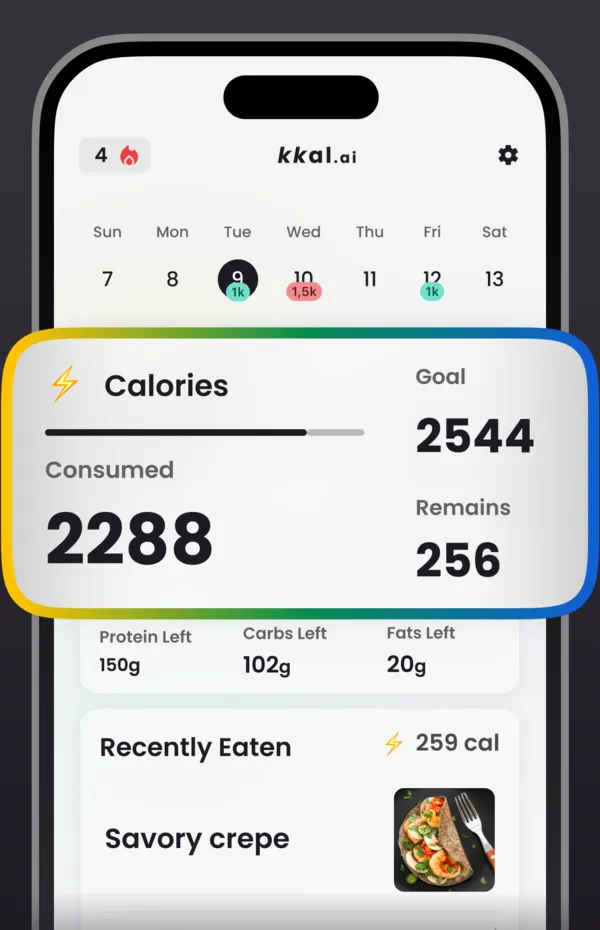
- Log before you eat, not at night. Entries made from memory miss snacks and second helpings. A photo of the plate takes seconds; see how a calorie counter that works from a photo logs it.
- Keep the same rhythm all week. Researchers who studied people who kept weight off for years describe regular self-weighing and a consistent eating pattern on weekdays and weekends.
- Close enough is fine. A day 150 kcal over the target does not ruin anything. What matters is the average over weeks.
After you reach your goal
Stopping the diet abruptly is the most common way to regain weight. Add about 100–200 kcal a day each week and watch the weekly average: when it stays level, you have found your new maintenance. You can then log less often, for example a few typical days a month, but keep weighing yourself regularly so that a slow drift is visible early. People who maintain a large weight loss for years often report exactly these habits: they keep monitoring their weight and keep their meals consistent.
When counting calories is not the right tool
Talk to a doctor or registered dietitian before you cut calories if you are pregnant or breastfeeding, under 18, have diabetes, kidney disease or another condition that affects what you eat, take medication that changes appetite or blood sugar, or have a history of disordered eating. If logging every bite makes you anxious, track only calories and protein, log a few days a week, or take a break.