A food diary is a simple record of everything you eat and drink: when, what, how much and, if you want, how many calories and how much protein it gave you. To keep one, write each entry right after you eat, note the amount by weight or a clear household measure, include drinks, oil and sauces, and look back at the whole week once it is done. You can keep it on paper, in a spreadsheet or in an app; the format matters less than logging every day and logging honestly.
A food diary is useful because memory is unreliable. Most people remember their meals but forget the handful of nuts, the second coffee with sugar and the oil in the pan. A systematic review of weight-loss studies found a consistent link between keeping a food record and losing weight, although the authors called the evidence weak because most studies relied on self-report and similar groups of participants.
Food diary template: what to write down
A good template has a few columns and nothing more. Copy this layout into a notebook or a spreadsheet, one row per meal or snack.
| Column | What to write | Example |
|---|---|---|
| Time | When you ate, to see your rhythm and long gaps. | 08:10 |
| Food and drink | Every item separately, including sauces, oil, sugar and drinks. | Oatmeal with milk and a banana, coffee with sugar |
| Amount | Grams or millilitres if you can weigh; otherwise a clear measure. | 60 g dry oats, 200 ml milk, 1 banana, 1 tsp sugar |
| Calories | From the package label, a food database or an app. | Total for the meal |
| Protein | Grams, from the same source as the calories. | Total for the meal |
| Notes | Hunger before eating (1–5), where you were, mood, or symptoms if a doctor asked you to track them. | Hunger 4, at home, in a hurry |
If you only want to understand your habits, the first three columns and the notes are enough. If your goal is weight loss or a specific amount of protein, add calories and protein. Carbs and fat are optional; the guide on how to count macros explains how to log them by weight.
How to keep a food diary: step by step
- Choose one format and keep it. A notebook, a spreadsheet or an app. Switching between them in the first weeks is how entries get lost.
- Log right after eating, not in the evening. Entries made from memory miss snacks, second helpings and drinks. If you cannot write it down, take a photo of the plate and fill in the entry later.
- Write the amount, not just the name of the dish. "Pasta" can mean 300 or 900 kcal. Weigh food for the first week or two; after that you will estimate your usual portions much better.
- Record everything, including the small things. Cooking oil, butter on bread, sauces, juice, alcohol, tastes while cooking and leftovers from a child's plate all count.
- Take calories from one reliable source. Use the package label where there is one. For fresh and unpackaged food, use a food composition database such as USDA FoodData Central or a calorie counter app, and pick raw or cooked values to match what you weighed.
- Do not change your eating in the first week. The first week is a snapshot of your normal diet. Eating "better because it is being recorded" hides the patterns you want to find.
- Review the week on the same day each week. Add up the daily totals, find the average and look for repeating patterns. The next section lists what to look for.
How much time does it take? In one 24-week online weight-loss program, participants spent on average about 23 minutes a day on their food records in the first month and about 15 minutes by the sixth month. Those who lost at least 5% of their weight opened their journal more often during the day (2.4 times versus 1.6), which supports logging as you go rather than once at night.

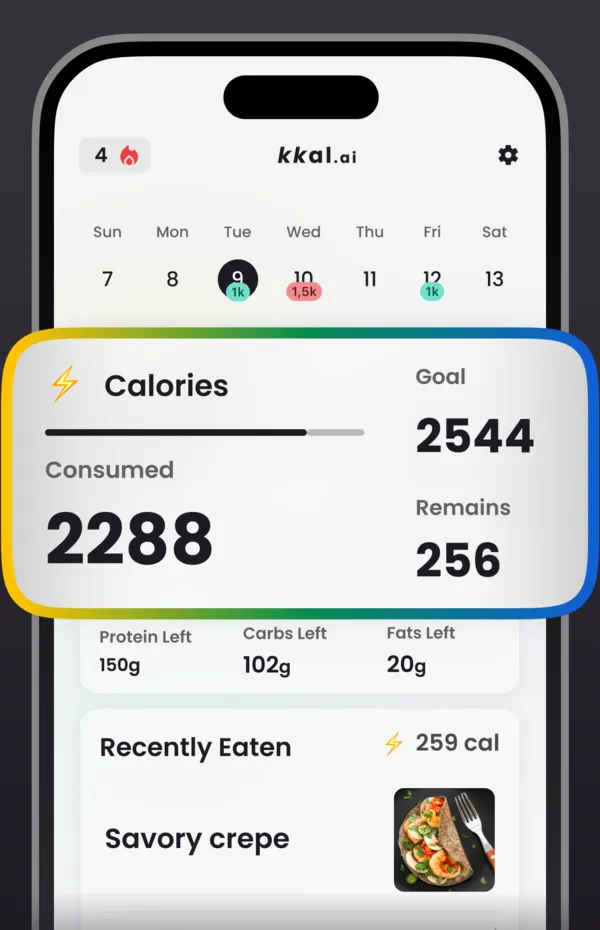
Paper, spreadsheet or app
- Paper notebook. Easy to start and good for notes about hunger and mood. The downside: you have to look up and add up calories yourself, so many people stop after a few days.
- Spreadsheet or printable template. The columns above fit on one sheet, and a spreadsheet adds up the totals for you. You still need to find calorie values for every food.
- App. Calories, protein and daily totals are counted automatically, and the diary is always in your pocket. Apps differ in how you log: searching a database, scanning a barcode or taking a photo of the meal. See how a calorie counter that works from a photo logs a meal.
How to read your food diary after a week
A diary only helps when you look at it. After seven days, check:
- Your average daily calories. If your weight was stable that week, this number is close to your maintenance. From there, the guide to the calorie deficit shows how to set a target for weight loss.
- Protein at each meal. Breakfasts and snacks are often low in protein. The macro calculator suggests a daily target.
- Drinks and extras. Juice, sweet coffee, alcohol, sauces and oil are easy to miss and often add up to a noticeable share of the day.
- Long gaps and late eating. A skipped lunch is often followed by a large evening meal or snacking.
- Weekdays versus weekends. Compare the totals: two heavy days can outweigh five careful ones.
Change one or two things at a time, not everything at once. If you want a ready structure for the day, a 1,800 kcal meal plan lists every portion in grams, and the step-by-step plan for how to lose weight by counting calories shows what to do in the following weeks.
A food diary for weight loss
If you keep a food diary to lose weight, two additions make it much more useful. First, write your daily calorie target at the top of each day and the total at the bottom, so you see at a glance whether the day landed close to it. Second, add one line per week with your average morning weight: weigh yourself after the toilet and before breakfast on a few mornings, and compare weekly averages rather than single days. Daily weight moves with water, salt and digestion, so one heavy morning means little. When the diary and the weekly average are side by side, it becomes clear whether the target works or needs adjusting, and you do not have to guess whether a slow week came from food or from water.
Common food diary mistakes
- Logging only "good" days. Skipping a day after a big dinner makes the diary look better than reality. Log the hard days too; they are the most informative.
- Guessing portions forever. Estimates drift over time. Weigh your usual portions again every few weeks.
- Mixing raw and cooked values. Rice, pasta and meat change weight when cooked. If you weigh cooked food, use a cooked value from the label or database.
- Making it too detailed. Tracking every micronutrient is tiring. Start with food, amount, calories and protein.
When to be careful
If a doctor or dietitian has given you a food diary for a medical reason, such as diabetes in pregnancy, a food intolerance or digestive symptoms, use the format they asked for and bring it to the appointment. If you have a history of disordered eating, or if recording food makes you anxious, talk to a professional first; a diary of meals and feelings without calories may suit you better, or none at all.